One person. The whole process.
Product designer working on business UX. My job is taking a half-formed idea or a messy internal process and turning it into a website, an MVP or a tool that moves one specific number.
- Remote
- 10+ years of experience
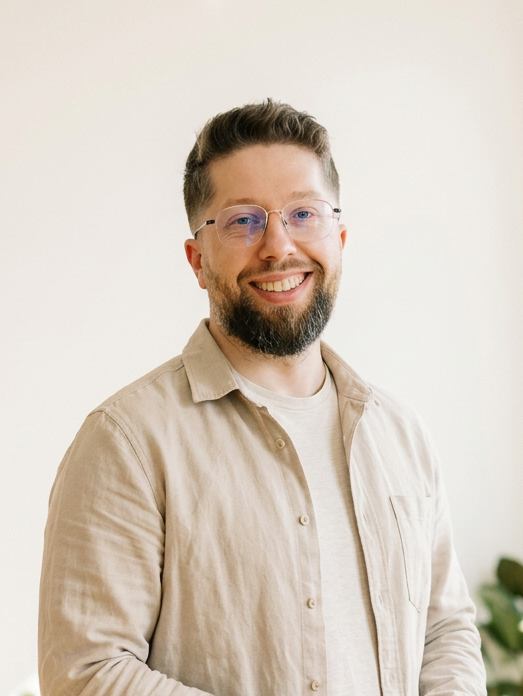
I design for decisions, not aesthetics.
I'm a product designer working on business UX. People come to me with something half-formed: an idea, an offer nobody understands, a process held together by spreadsheets. It leaves as a website, an MVP or a tool with one clear job. Working on a product used by thousands of restaurants taught me what UX has to survive at scale.
I can write the code, which is exactly why I don't start there. First we get clear on the problem, who has it, and what decision they're trying to make. The technical choice comes after that, and it's the reason expensive rewrites don't show up two months post-launch.
I build my own products on the side, which changes how I read yours. I'm thinking about what it costs you, what happens if it fails, and whether anyone outside the building has confirmed the idea.
A good website doesn't start with picking a technology.
It starts with a question: what does the visitor need to understand before they'll decide anything?
- 01
Goal first, tool second.
The goal, the audience and the path a visitor takes get settled first. Technology and visuals are downstream of that, not the other way round.
- 02
The 20/80 rule.
The first version aims at the 80% of the result that 20% of the work delivers, because it has to be fast enough to build and test cheaply. Anything beyond that gets planned once the market has said yes.
- 03
UX built around business decisions.
Every screen exists to help someone decide something. Decoration that doesn't serve that decision comes out.
- 04
AI and data in the background.
AI and my own tooling handle research, SEO groundwork and the repetitive parts. What they don't do is decide anything or sign off on quality.
- 05
Development as delivery.
Code is how a good decision reaches production. It's never where the thinking starts.
- 06
A retainer, not a closed package.
Launch is a checkpoint, not an ending. Either we measure and keep improving, or we part ways with everything documented and nothing hanging.
You don't need to hire a strategist, a UX designer and a developer separately.
One person who thinks like a designer, runs their own products, and can ship the code.
- ↳ 01 A website is a business tool. It explains the offer, moves people toward one action, and either supports sales or it isn't finished.
- ↳ 02 I've spent my own money and my own weekends on products, so I know what budget and scope pressure feel like from your side of the table.
- ↳ 03 Problem to concept to design to shipped build, all handled without you coordinating four contractors who each blame the other three.
- ↳ 04 AI and my own tooling speed up research, content and SEO work. They're tools; the decisions stay human.
- ↳ 05 When a project genuinely needs more hands, I bring in people I've worked with and stay accountable for the schedule and the quality.
Let's talk about your project.
Two or three sentences is enough for me to tell you whether I can help. If someone else would do it better, I'll say that instead.